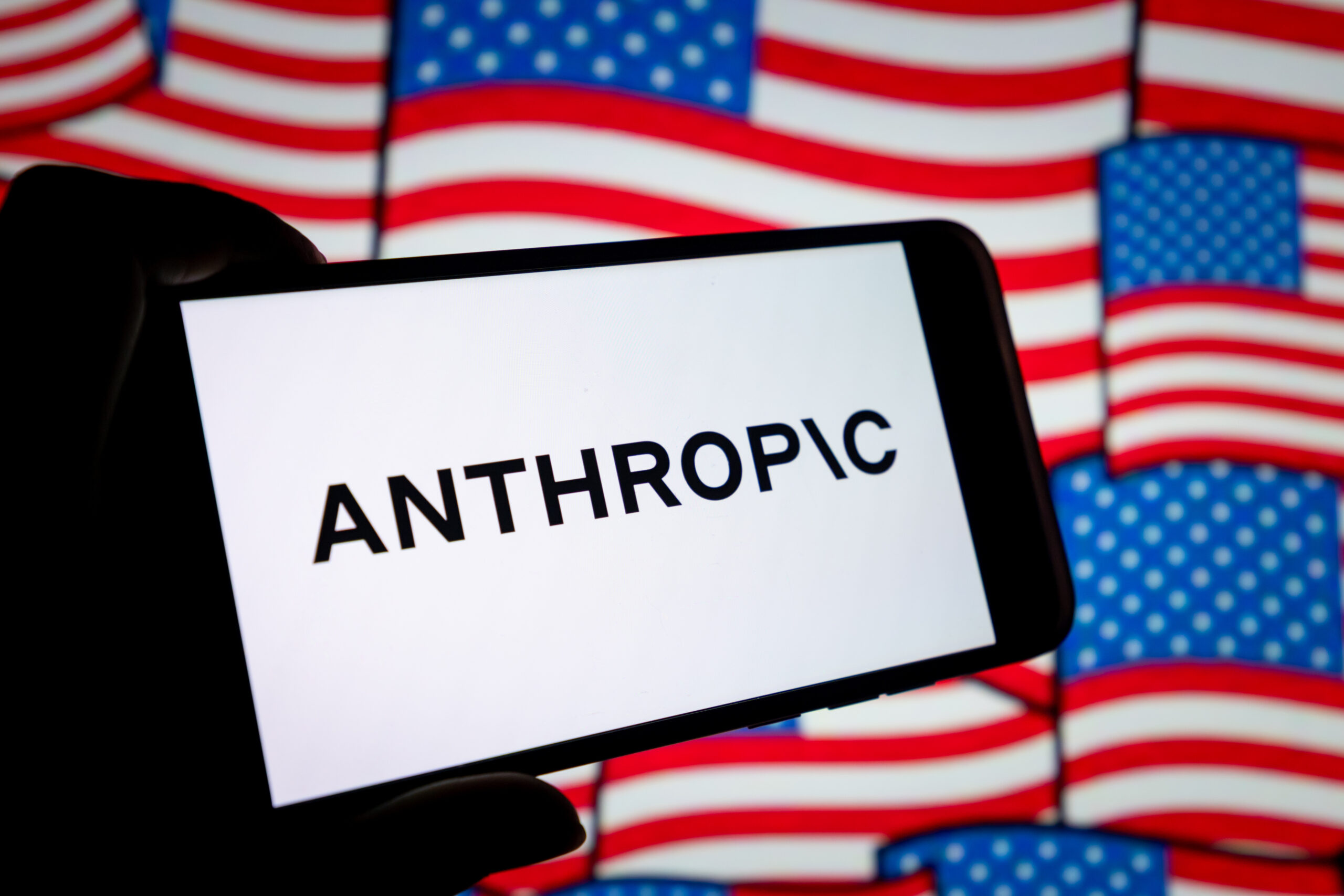
CHONGQING, CHINA - NOVEMBER 12: In this photo illustration, the logo of Anthropic is displayed on a smartphone screen with US national flags in the background on November 12, 2025 in Chongqing, China. Anthropic has announced a $50 billion investment in computing infrastructure, including new data centers in Texas and New York. (Photo by Li Hongbo/VCG via AP )
A federal judge struck down the Pentagon’s blacklisting of Anthropic, ruling Thursday that the Trump administration illegally retaliated against the artificial intelligence company for criticizing the government.
Read more Trump’s Mail-In Ballots Plan Blocked by Judge Yet Again
U.S. District Judge Rita F. Lin found that the administration violated Anthropic’s First Amendment and due process rights and that Defense Secretary Pete Hegseth improperly designated the company a national-security supply chain risk.
“The empty invocation of national security is not a blank check to punish and retaliate against government critics,” Lin .
The ruling vacated Hegseth’s designation and barred the administration from enforcing the measures Anthropic challenged.
Trending
-

Trump Is Quietly Working to Give Part of Yosemite to a Private Developer
-
D.C. Won’t Say How It’s Using Its Flock Cameras
-

Gas Prices Are High. Trump’s Supporters Are Feeling The Most Pain.
-
House Majority Could Hinge on Governors’ Races Trending Toward Democrats
Anthropic sued after the Pentagon designated it a supply chain risk and moved to cut it off from federal work. The company argued that officials retaliated after it resisted demands to remove restrictions on using its Claude models for mass domestic surveillance of Americans and fully autonomous weapons.
The ruling confirms concerns Lin raised at a hearing last month, when she said the government had failed to produce evidence showing Anthropic posed the threat officials claimed.
Lin found that Anthropic’s public criticism was a substantial factor in the government’s actions. She pointed to statements from President Donald Trump and Hegseth attacking the company and said officials sought to “make a public example out of Anthropic” after the dispute became public.
The administration argued that Anthropic could not be trusted and that its conduct raised concerns it could interfere with military systems.
Lin rejected that argument, saying she found no “articulable basis” to believe Anthropic would sabotage its models and said the government had not shown the company could alter them after they were deployed on national security systems.
“An IT vendor does not become a potential adversary of the United States whenever it asks probing questions or stubbornly insists on particular contracting terms, even if doing so causes DoW to doubt its trustworthiness,” Lin wrote.
Read more No-Stakes Baseball Doesn’t Exist — Not Even at Nats Park
Anthropic praised the ruling.
“We welcome the court’s ruling that this supply chain risk designation was unlawful. We remain focused on working productively with the government to harness AI for our national security so all Americans benefit from this technology,” an Anthropic spokesperson told The Verge.
The Pentagon did not immediately respond to requests for comment.
Anthropic was the first U.S. company publicly designated a supply chain risk under the law the Pentagon invoked, which is intended to protect military systems from threats including sabotage. Lin found that Anthropic’s contract dispute and public criticism did not meet the law’s definition of a supply chain risk.
The judge also found that the administration’s continued dealings with Anthropic also undermined its national security argument.
A day after Anthropic was formally designated a supply chain risk, Pentagon under secretary Emil Michael told the company that the two sides were “very close” to reaching a deal. The White House later discussed possible uses of Anthropic’s newer Mythos model in sensitive settings, according to the ruling.
“None of that is consistent with a genuine fear that Anthropic is a saboteur who would poison its software to harm national security,” Lin wrote.
Lin also found problems with how the Pentagon reached its decision.
Hegseth publicly ordered the designation before officials completed the analysis supporting it. The Pentagon prepared the factual basis afterward, which Lin said suggested the record was assembled “after the fact to justify the foreordained conclusion.”
The Pentagon also failed to adequately consider less-restrictive alternatives and did not give congressional committees the explanation required under federal law. Lin found the designation was “arbitrary and capricious.”
The ruling does not require the Pentagon to use Anthropic’s technology. The Pentagon had continued removing Anthropic’s technology from military systems while the case was pending and expected to finish that process by the end of September, government lawyers said at last month’s hearing.
The government is expected to challenge Thursday’s ruling.
Anthropic has a separate case pending in the U.S. Court of Appeals for the District of Columbia Circuit challenging a related supply chain risk designation issued under a different federal law.
Read more Trump Is Quietly Working to Give Part of Yosemite to a Private Developer
About the Author