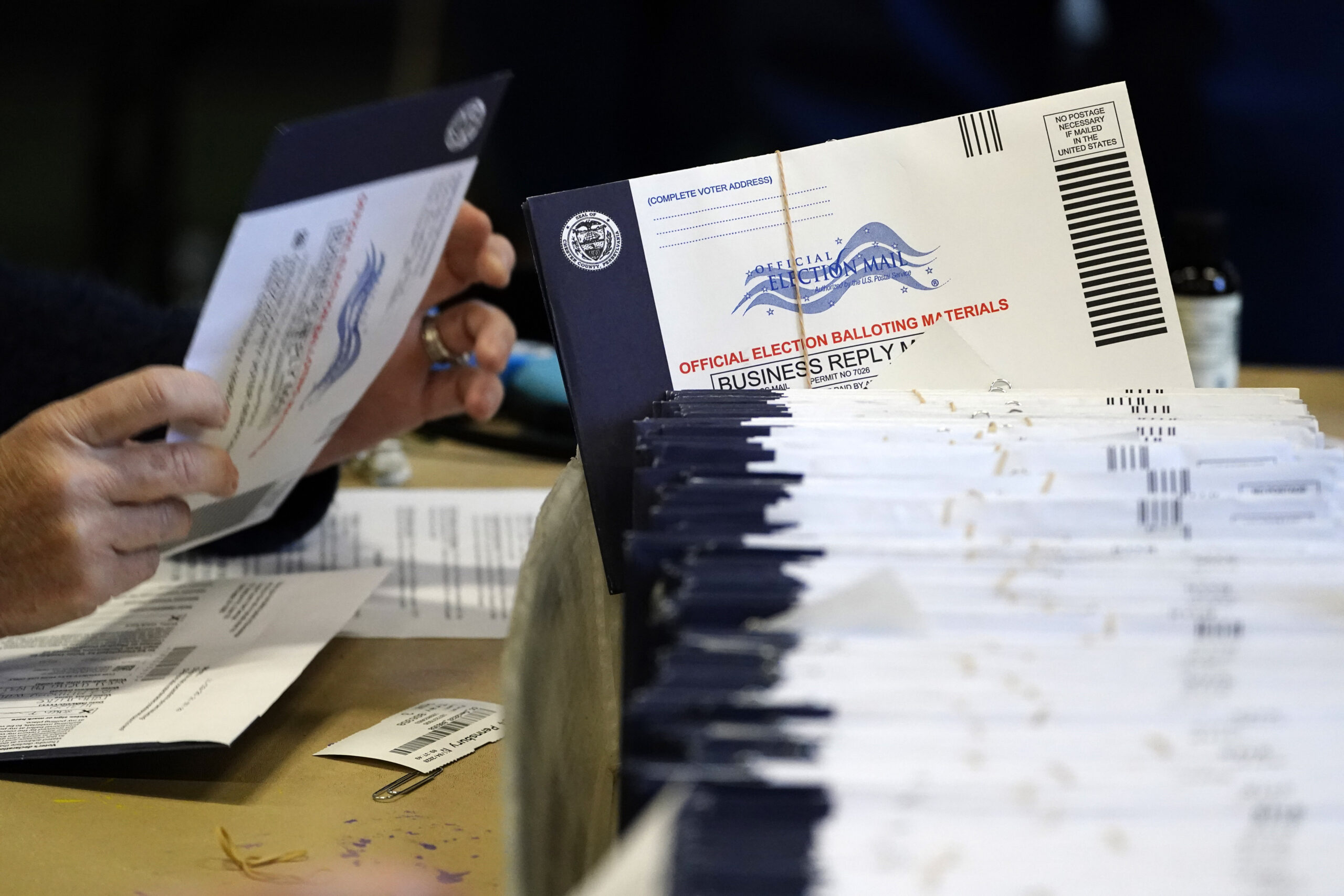
FILE - Chester County, Pa., election workers process mail-in and absentee ballots at West Chester University in West Chester, Pa., Nov. 4, 2020. (AP Photo/Matt Slocum, File)
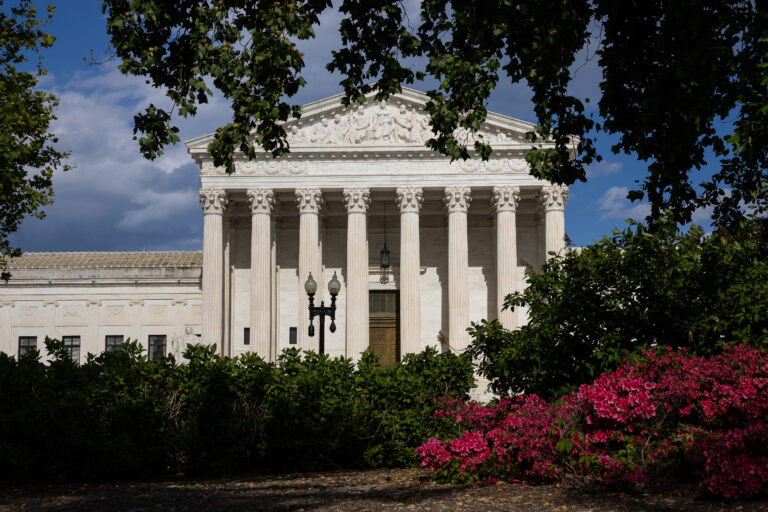
The Supreme Court ruled on Monday that states are allowed a grace period for collecting mail-in ballots, quashing a lawsuit that would have restricted voting by mail.
Read more Trump’s Pick for Ethics Czar Is a Political Operative
In 15 states and the District of Columbia, a ballot is valid if election officials receive it up to five days after Election Day. The 5-4 ruling in Watson v. Republican National Committee permits states to count late-arrivingmail-in ballots postmarked by Election Day.
Justice Amy Coney Barrett, a justice appointed by President Donald Trump who sided with the majority, wrote in her opinion that the question before the Supreme Court was “a narrow one about timing.” She wrote that federal laws dictate “the day when the electorate must make its choice” but do not set a deadline for when the ballots should be received.
“The Constitution requires the ‘Day on which [the electors] shall give their Votes’ to be ‘the same throughout the United States,’” Barrett wrote. “But it says nothing about the day for receipt, and, of course, 18th-century modes of transmission did not offer same-day delivery. The Constitution therefore envisions a system in which receipt is necessarily divorced from voting, and it sets the crucial, uniform day as the day of voting, leaving receipt to happen down the line.”
In his dissent, conservative Justice Samuel Alito argued that the majority’s ruling “leaves open opportunities for voter fraud that may further undermine Americans’ faith in the integrity of this country’s elections.”
“By allowing States to continue receiving new ballots during these drawn-out processes, today’s decision will only exacerbate voters’ distrust,” Alito wrote.
Read more Ethics Panel Dismisses Misconduct Complaint Against Sen. Ruben Gallego
Voter fraud happens rarely in the U.S., but conservatives have long argued otherwise.
The state of Mississippi changed its election laws in 2020 to accept mail-in ballots within five days of the election. But the state’s Republican Party and the RNC sued in 2024, claiming the state’s law conflicted with the federal law that sets Election Day. Mississippi argued that the election is not hinged on which day ballots are received.
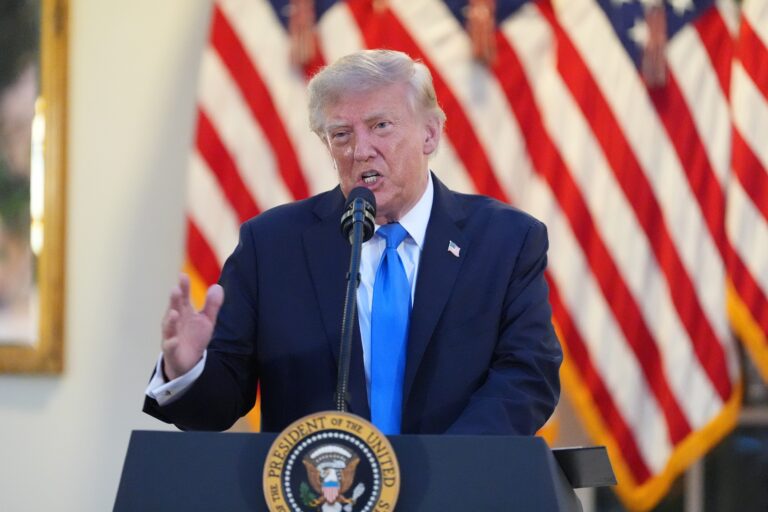
The Trump administration filed an in support of the RNC, writing that “federal law designates a single day for federal elections.”
Trump has rallied against mail-in voting, claiming without evidence that it’s riddled by fraud. The most recent version of the SAVE America Act would require documentary proof of citizenship to vote by mail, with no instructions as to how states should collect that information.
Older adults, people with disabilities, rural Americans and service members stationed overseas often utilize mail-in voting, but it’s a common practice in general — nearly one in three Americans voted by mail in the last election.
Read more Nancy Pelosi Lines Up Her Next Gig
Editor’s Note: This story has been updated with additional reporting.
About the Author