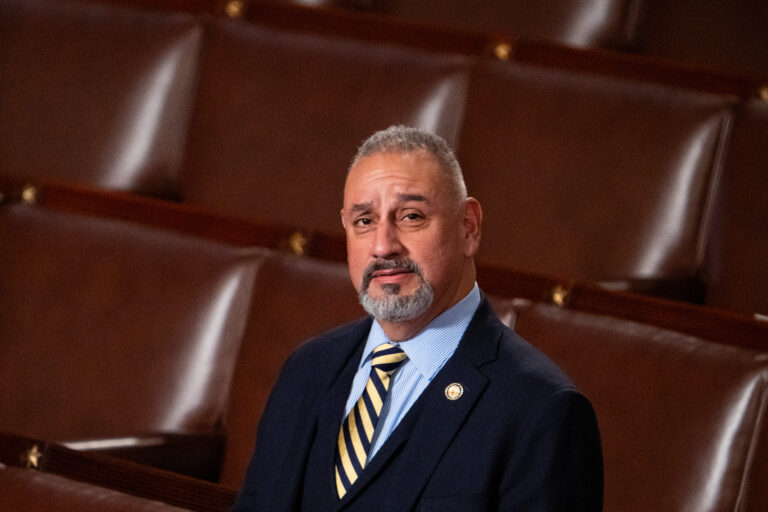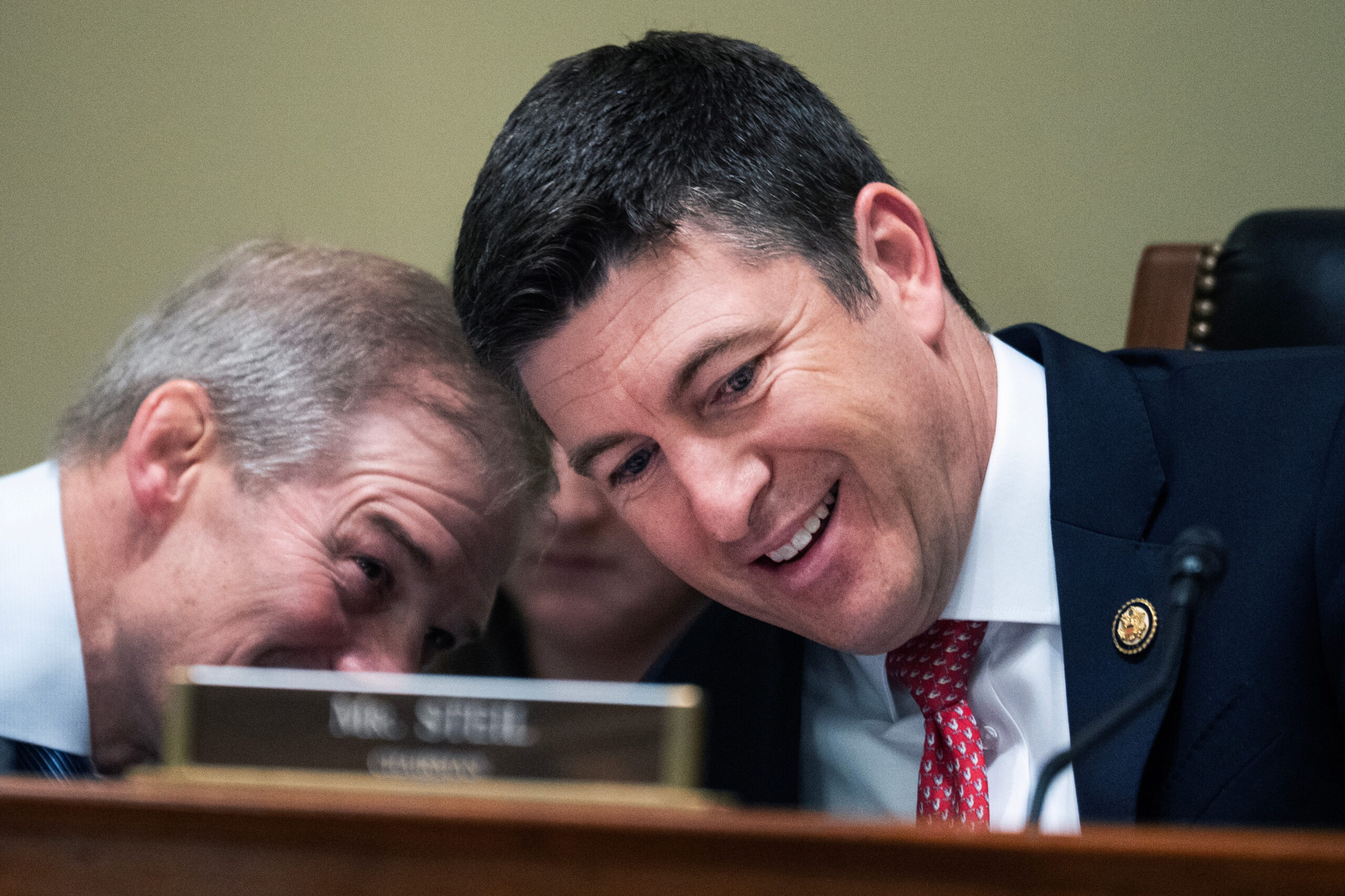
UNITED STATES - JUNE 10: Chairman Bryan Steil, R-Wis., right, and Rep. Jim Jordan, R-Ohio, attend the House Administration Committee hearing titled "Preventing Fraudulent Donations: Transparency, Verification, and Accountability," in Longworth building on Wednesday, June 10, 2026. The witness, Regina Wallace-Jones, CEO of ActBlue, invoked her Fifth Amendment privilege. (Tom Williams/CQ Roll Call via AP Images)
The House on Wednesday passed legislation that would prevent members of Congress, their spouses and their children from buying individual stocks.
Read more House Republicans Ram Through Reconciliation 3.0 Despite Little Senate Buy-in
But the bill is likely dead on arrival in the Senate, where Republican leadership has shown little interest in the matter. And some lawmakers in both chambers say the House bill does not go far enough to mitigate potential conflicts of interest between lawmakers’ official actions and their personal finances.
The Stop Insider Trading Act, which passed on a 232-198 vote with 13 Democrats joining Republicans, allows lawmakers and their immediate family members to retain, and eventually sell, individual stocks they already hold. Lawmakers would be required under the bill to publicly disclose their plans to sell stock holdings between seven and 14 days in advance of a sale.
The legislation also imposes a fine of $2,000 or 10% of a transaction — whichever is greater — for disclosure and trading violations.
Trending
-

Suspicion and Doubt at the National Civics Contest
-

Dana Milbank: Maybe Pete Hegseth Is the One With a Testosterone Problem
-
USDA Workers Don’t Plan to Stay on the Job as Offices Relocate
-

House Committee Advances Bill Limiting D.C.’s Ability to Raise Taxes
House Republicans with language from another bill that would require voters to present photo ID to cast a ballot — President Donald Trump’s top priority ahead of the midterm elections.
Rep. Chip Roy (R-Texas), who has worked on several stock-ban bills this decade, said on the House floor Wednesday afternoon before the vote that he would have preferred a standalone vote on the stock-trade language. But, Roy added, he was “proud of the legislation.”
“This is a giant step forward. I wish my colleagues on this side of the aisle and my colleagues on this side of the aisle would recognize that and praise it,” Roy said.
Republican lawmakers lined up alongside Roy to express their support. Rep. Mike Lawler (R-New York) said he supported ending stock trading by members of Congress because “trust in our democracy cannot be a luxury item.”
“It must be the everyday expectation of every American,” Lawler added.
House Democrats largely opposed the bill, characterizing it as a watered-down version of other bipartisan bills that would go further by barring members of Congress and their families from owning stocks altogether and apply the same standards to the president and vice president.
“Two things can be true at the same time. I can support voter ID requirements, which I do, and I can support banning members of Congress from trading stocks, which I do,” Rep. Chrissy Houlahan (D-Pennsylvania) said during debate on the House floor Wednesday afternoon. “I can also oppose this bill because it is not in that honest attempt to do either.”
But Rep. Bryan Steil (R-Wisconsin) criticized his colleagues for making “Goldilocks arguments” claiming the bill went too far or did not go far enough.
“I believe this is our opportunity where we can simply stop members of Congress from trading individual stocks. Period. Full stop,” Steil said during remarks on the House floor. “Doing so removes even the appearance of wrongdoing. Americans should be confident that individuals working here are working on their behalf, not on behalf of their own financial interests.”
Democrats worked alongside Republicans on other stock-trade ban proposals this year, including the Restore Trust in Congress Act.
Read more Trump Offered Gold Star Family a Ride on His New Air Force One
A bipartisan group of lawmakers including Roy and Reps. Seth Magaziner (D-Rhode Island), Alexandria Ocasio-Cortez (D-New York), Tim Burchett (R-Tennessee), Pramila Jayapal (D-Washington) and Anna Paulina Luna (R-Florida) negotiated the Restore Trust in Congress Act for months before unveiling the legislation last September.
The bill would have barred members of Congress and their families from trading and owning individual stocks and forced them to divest from any stock holdings, allowing them to defer paying taxes on the sale if they reinvest in a mutual fund.
But unlike the Stop Insider Trading Act, the Restore Trust in Congress Act and other similar measures failed to generate enough support in the current Congress to advance to the full House for a vote.
Ethics watchdogs including Common Cause, Campaign Legal Center, Citizens for Responsibility and Ethics in Washington, Public Citizen and the Project on Government Oversight . They expressed serious concerns about the Stop Insider Trading Act allowing lawmakers to continue to own or sell stocks.
The Senate is unlikely to take up the Stop Insider Trading Act ––the measure is not likely to overcome the Senate’s 60-vote filibuster, especially with the voter ID provisions added, and previous stock-ban bills have stalled in the upper chamber.
A much stronger stock-ban bill championed by Sen. Josh Hawley (R-Missouri) advanced out of a Senate committee in July 2025 with the help of the committee’s Democratic members. But the bill has languished since then and Senate leadership hasn’t scheduled a vote on it.
Hawley’s bill, called the Halting Ownership and Non-Ethical Stock Transactions Act, or HONEST Act, would require members of Congress, the president and vice president, along with their spouses and dependent children, to sell their existing individual stocks and prevent them from buying new ones.
While Hawley said the Stop Insider Trading Act is “not nearly as robust as I would like,” he didn’t outright oppose it, saying something is better than nothing.
Momentum has been building for Congress to advance a stock-trading ban after a series of high-profile controversies, such as lawmakers making a flurry of stock trades immediately before and after the initial COVID-19 pandemic shutdowns of early 2020.
NOTUS and other news organizations have also identified dozens of members of Congress this decade who’ve violated the disclosure provisions of the existing Stop Trading on Congressional Knowledge Act, or STOCK Act, of 2012.
Barring members of Congress from trading individual stocks has high public support among Republican, Democratic and independent voters alike, according to polls.
The STOCK Act of 2012 was the last major piece of legislation that regulated congressional stock trading and prohibited conflicts of interest. The bill clarified that insider-trading laws apply to Congress and expanded financial-disclosure requirements, but did not place limits on lawmakers’ ability to buy, sell and own individual stocks.
Read more House OKs a $1 Trillion Defense Bill in a Tight Vote
About the Author