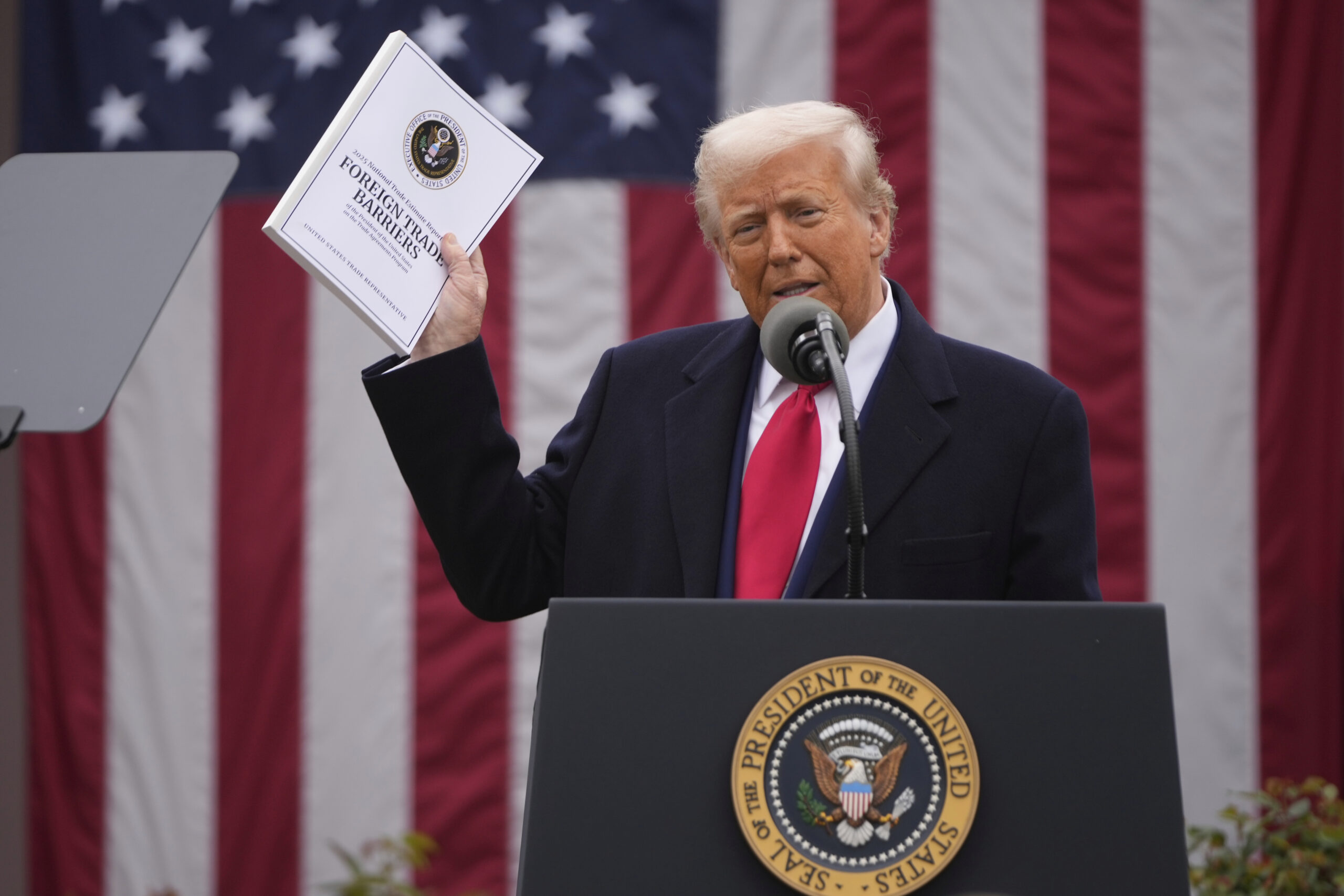
President Donald Trump speaks during an event to announce new tariffs in the Rose Garden at the White House, Wednesday, April 2, 2025, in Washington. (AP Photo/Mark Schiefelbein)
The U.S. trade office proposed new tariffs Tuesday for imports from dozens of places, citing their failure to ban goods made with forced labor. The proposal is the latest move in the Trump administration’s campaign to rebuild its tariff regime after the Supreme Court struck down its emergency powers.
Read more Top HHS Lawyer Reassigned After Stock Trading Rebuke
The Office of the U.S. Trade Representative proposed additional duties of up to 12.5% that would take effect next month on imports from 60 economies — including China, the European Union and Japan — over labor practices seen as unfair to American workers.
“The failure of our most important trading partners to address the importation of goods made with forced labor is unacceptable,” U.S. Trade Representative Jamieson Greer said in a statement announcing the action. “This creates a dynamic where American workers are forced to compete globally on an unlevel playing field. We will no longer tolerate this disparity.”
The proposal drew immediate pushback from abroad, with European officials bristling at the accusation that the region is less effective than the U.S. at curbing trade in forced-labor goods. One official described the findings as “utterly absurd” while adding that the bloc remains on track to meet its joint tariff commitments with Washington by the end of June.
Read more Republicans Are Investigating Anti-Data-Center Nonprofits Over Their China Ties
“The impression is increasingly emerging that a tariff measure is sought first, and only then is a suitable legal justification found,” Bernd Lange, the chair of the European Parliament’s trade committee, told Reuters.
The White House did not immediately respond to requests for comment.
The proposal stems from as the Trump administration seeks to rebuild its emergency tariffs, which were largely struck down by the Supreme Court in February.
Certain products would be exempt from the proposed tariffs, including energy-related products, rare earths, beef, coffee, some fruits and vegetables, pharmaceuticals, organic chemicals and aircraft parts.
Read more Leading Public Health Journal Suggests How To Define Ultra-Processed Foods
About the Author