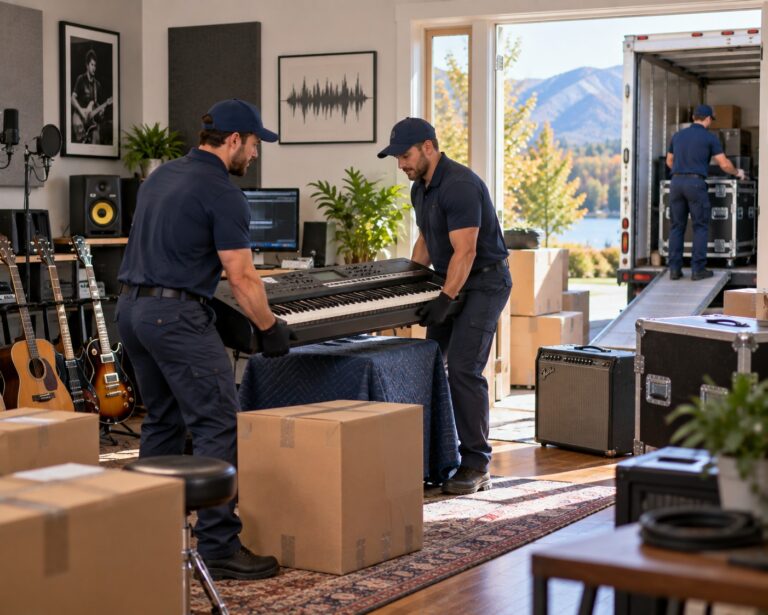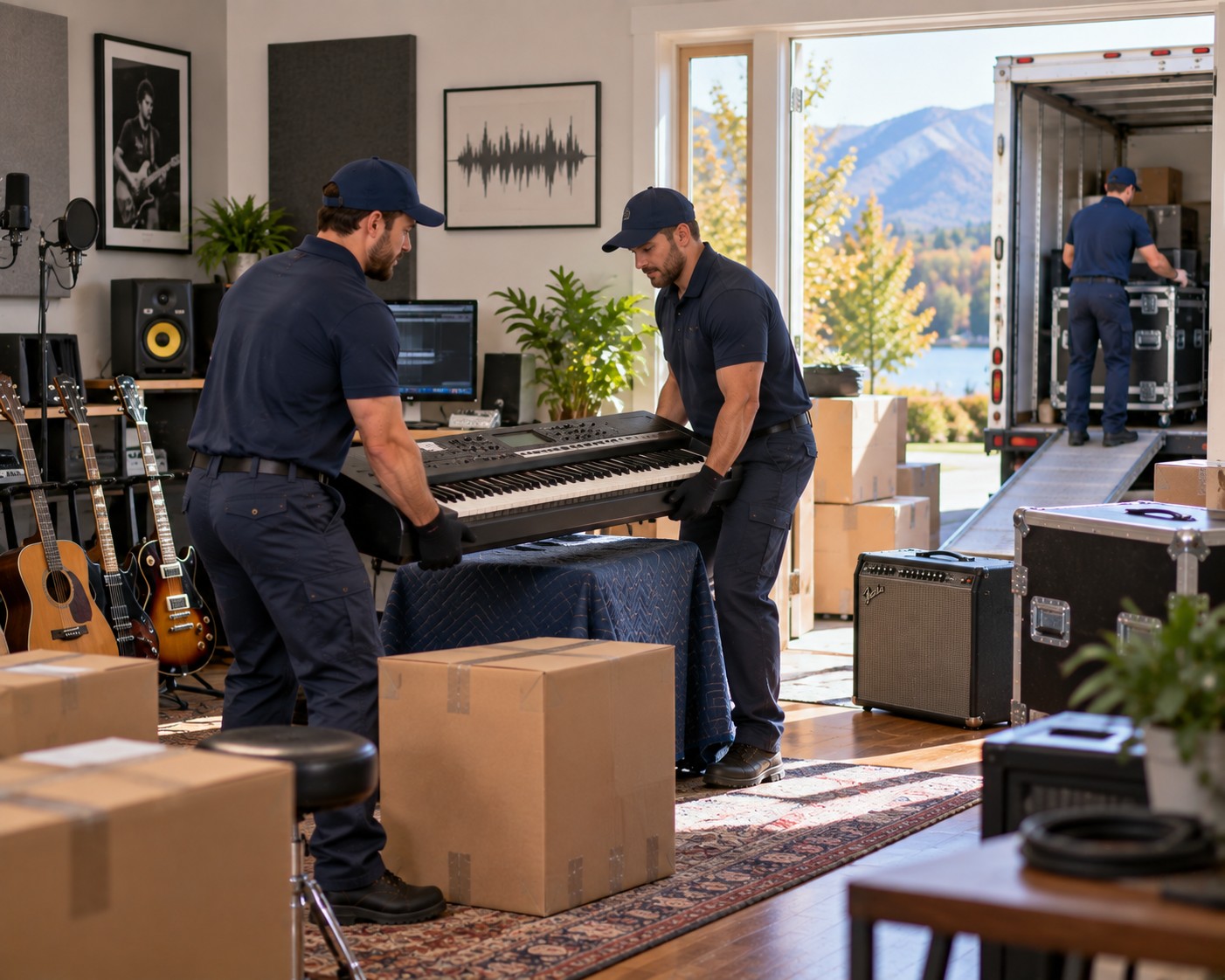
A home music studio is not an ordinary room filled with furniture. Behind the microphones, instruments, monitors, and recording equipment is a carefully arranged creative environment where placement and acoustics can matter as much as the equipment itself. When a Burlington homeowner relocates, preserving that setup requires considerably more thought than simply putting everything into boxes.
A successful studio move begins by treating the equipment as a connected system. Recording gear, instruments, acoustic panels, computers, cables, stands, and furniture should be inventoried individually so the new room can be reconstructed efficiently.
Document the Studio Before Disconnecting Anything
Before touching a cable, photograph the entire studio from several angles. Close-up images of connections, patch bays, interfaces, monitor placement, and cable routes can become valuable references during reinstallation.
Create a written equipment inventory at the same time. Include microphones, audio interfaces, mixers, studio monitors, headphones, MIDI controllers, computers, external drives, amplifiers, instruments, stands, and acoustic treatment.
Best Moving Services for a home studio should account for the sensitivity and value of this equipment rather than approaching the relocation as a conventional household move.
Label Every Connection
Studio setups can contain dozens of cables that appear similar. Label both ends of important connections before disconnecting them. Keep cables with the equipment they serve whenever possible, and use separate containers for adapters, power supplies, microphone clips, and small accessories.
This simple step can save hours when the new studio is being assembled.
Give Instruments Their Own Protection Plan
Musical instruments vary dramatically in their transportation requirements. Guitars, keyboards, drum equipment, string instruments, amplifiers, and electronic devices should not automatically receive identical packing treatment.
Hard cases should be used where available. Instruments without cases can be protected with appropriate padding and placed so that they cannot shift during transportation. Amplifiers and heavier equipment should be secured separately from delicate instruments and recording gear.
Drum kits deserve special attention because their individual components can become separated easily. Keep shells, hardware, pedals, cymbals, and stands clearly grouped and labeled.
Protect Electronics From Vermont Conditions
Burlington’s seasonal climate makes environmental preparation important. Sensitive electronics should be protected from moisture and extreme temperature changes during transportation and while waiting for installation.
Computers, external drives, interfaces, microphones, and monitors should remain protected until they can be brought into a suitable indoor environment. External drives containing recordings should receive particular attention because replacing the physical equipment may be possible, but recreating unique recordings may not be.
For homeowners planning moves elsewhere in the state, https://starvanlinesmovers.com/locations/vermont provides a useful starting point for reviewing moving assistance throughout Vermont.
Recreate the Studio Without Guesswork
The destination room should be evaluated before the equipment arrives. Measure the space and identify electrical outlets, windows, doors, ventilation, and available wall space. If possible, photograph the empty room so the layout can be considered before heavy equipment is carried inside.
Do not assume that the new room will sound identical to the old one. Acoustic panels, bass traps, monitor stands, desks, and microphones may need different positions because the room dimensions and surfaces have changed.
Keep Acoustic Treatment Organized
Acoustic panels and other sound-control materials should be labeled according to their original location. Photographing their arrangement before removal makes it easier to recreate the overall treatment pattern.
However, the new room may benefit from adjustments rather than an exact copy. The relocation provides an opportunity to reassess monitor placement, recording positions, cable management, and working space.
Protect the Creative Routine
A studio move can become disruptive when equipment remains packed for too long. Prepare a small temporary recording setup if the homeowner needs to continue working during the transition. A laptop, headphones, compact interface, and essential microphone can provide a basic creative workstation while the main room is being rebuilt.
Keep project files backed up in multiple secure locations before the move. This protects ongoing recordings even if physical equipment is temporarily unavailable.
Best Moving Services can support the physical side of the relocation, but the homeowner’s preparation determines how efficiently the studio becomes functional again.
With careful documentation, specialized protection, organized cables, secure transportation, and a thoughtful destination layout, moving a Burlington home music studio can preserve both the equipment and the creative environment built around it.
About the Author