Hardwood floors can completely change the feel of a home. Their polished surfaces, natural grain, and warm appearance add character to both older Gastonia properties and contemporary residences. Moving heavy furniture across those floors, however, introduces risks that are easy to underestimate. A small stone beneath a furniture leg, an unprotected dolly wheel, or an awkward turn can leave scratches or dents behind.
For homeowners planning a furniture move, floor protection should be considered alongside packing and transportation. Whether the project is part of a larger Greensboro relocation or a move within the Gastonia area, preparing the walking and carrying routes before the first piece leaves the room can make a significant difference.
Homeowners can review https://milestonerelocation.com/greensboro when exploring professional moving assistance and organizing the transportation side of a residential relocation.
Inspect the Floor Before Furniture Is Moved
Begin with a walk-through of every room containing hardwood flooring. Look for existing scratches, loose boards, worn finishes, raised thresholds, and transitions between different flooring materials.
Taking photographs before moving day can provide a useful record of the floor’s condition. It also helps identify sections that may require additional protection because of recent refinishing or particularly delicate finishes.
Entryways deserve special attention. Dirt, gravel, and small particles brought inside from driveways can become trapped underneath equipment and furniture. Sweep or vacuum the planned route before moving begins.
Map the Furniture Route
Do not assume the shortest route is automatically the safest. A large sofa may need to be tilted through one doorway, while a heavy cabinet may require a wider path through another room.
Measure large furniture and compare its dimensions with doorways, corridors, and corners. Remove lamps, decorative objects, rugs, and small tables that could obstruct the path.
Planning the route in advance reduces the temptation to drag or rotate heavy furniture across an unprotected floor.
Choose Floor Coverings Carefully
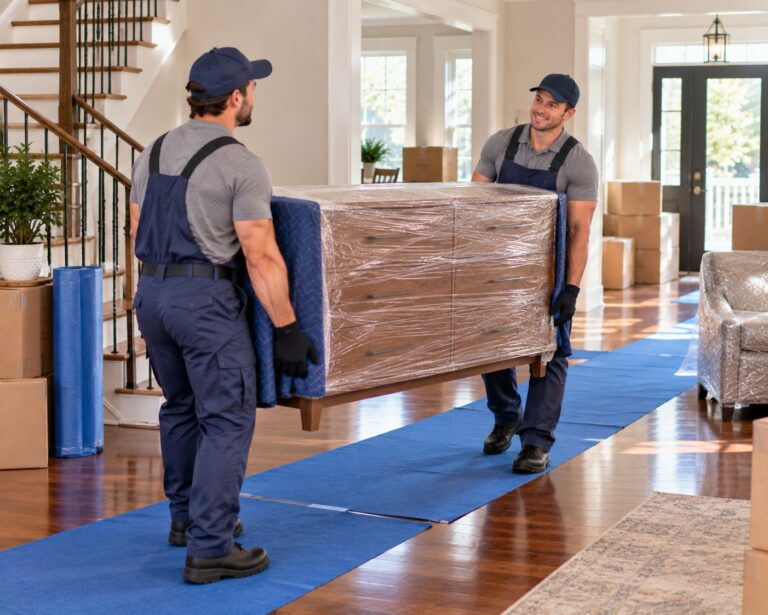
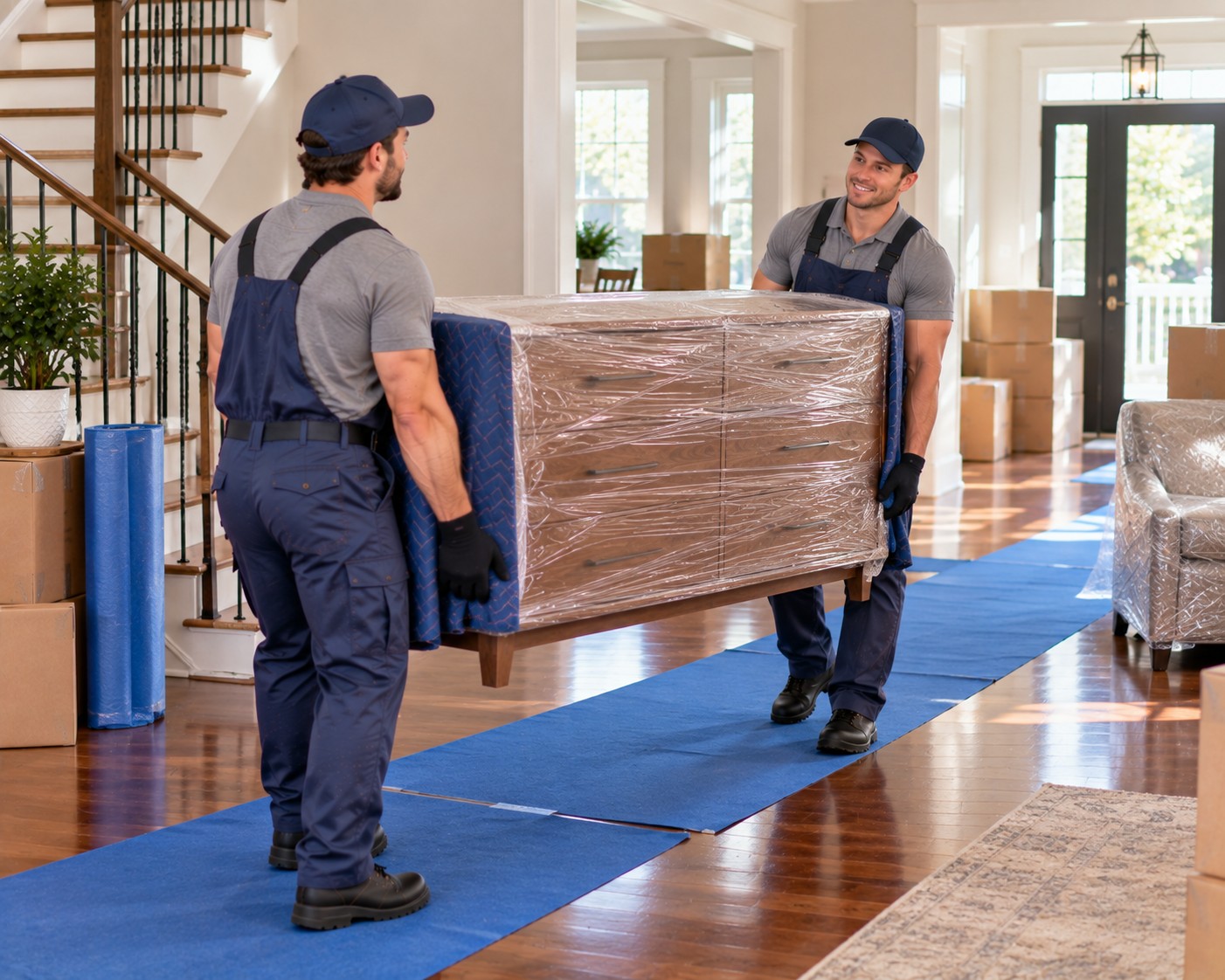
Not every covering is suitable for hardwood. Loose blankets can shift beneath moving equipment, while thin plastic may become slippery. Use secure floor runners, protective boards, or other materials designed for moving activity.
Make sure edges are firmly positioned and do not create trip hazards. The protected path should extend from the main entrance to the areas where furniture will be loaded or unloaded.
If the move involves both an existing residence and a destination home, consider the condition of the flooring at both properties. A carefully protected hardwood floor at the starting address should not be followed by an unprotected unloading process at the new one.
Prepare Furniture Before It Moves
Floor protection begins with the furniture itself. Inspect the bottom of tables, chairs, cabinets, beds, and other large pieces for dirt, loose hardware, protruding screws, damaged feet, or metal components.
Clean furniture feet before moving them. Attach suitable padding where appropriate, but never rely on small protective pads as a reason to drag a heavy item across the floor.
Drawers and removable shelves can often be taken out to reduce weight. This makes large pieces easier to control and lowers the risk of sudden shifts while they are being carried.
Use Equipment With Care
Dollies, sliders, straps, and other moving equipment can make heavy furniture easier to handle, but they must be used correctly. Wheels should be clean and appropriate for the protected surface.
Never roll heavy furniture directly across exposed hardwood if there is a risk of grit becoming trapped beneath the wheels. When crossing thresholds, maintain control rather than allowing the furniture’s weight to drop suddenly.
A Gastonia furniture move may also involve porches, steps, garages, or sloped driveways. These transitions should be included in the route assessment instead of being treated as separate problems.
Protect Walls and Door Frames Too
Furniture can damage more than flooring during a difficult maneuver. Large wardrobes, bookcases, and sectional sofas may swing into freshly painted walls or scrape door frames when being turned.
Padding vulnerable corners and removing unnecessary obstacles creates additional clearance. If a doorway is particularly narrow, measure the furniture at its widest point before attempting the move.
Homeowners arranging local moving assistance can also review https://milestonerelocation.com/gastonia/ early in the planning process, particularly when large or difficult-to-maneuver furniture is involved.
Keep the Moving Day Controlled
A clean route, suitable floor protection, and clearly assigned responsibilities can prevent many avoidable accidents. Keep children, pets, and unnecessary objects away from the carrying path, and avoid rushing when a heavy item reaches a doorway or tight corner.
Protecting hardwood floors during a Gastonia furniture move is ultimately about preparation. By inspecting the surfaces, mapping the route, selecting secure coverings, preparing furniture, and using equipment carefully, homeowners can move substantial pieces while preserving the floors that give their home its distinctive character.
About the Author