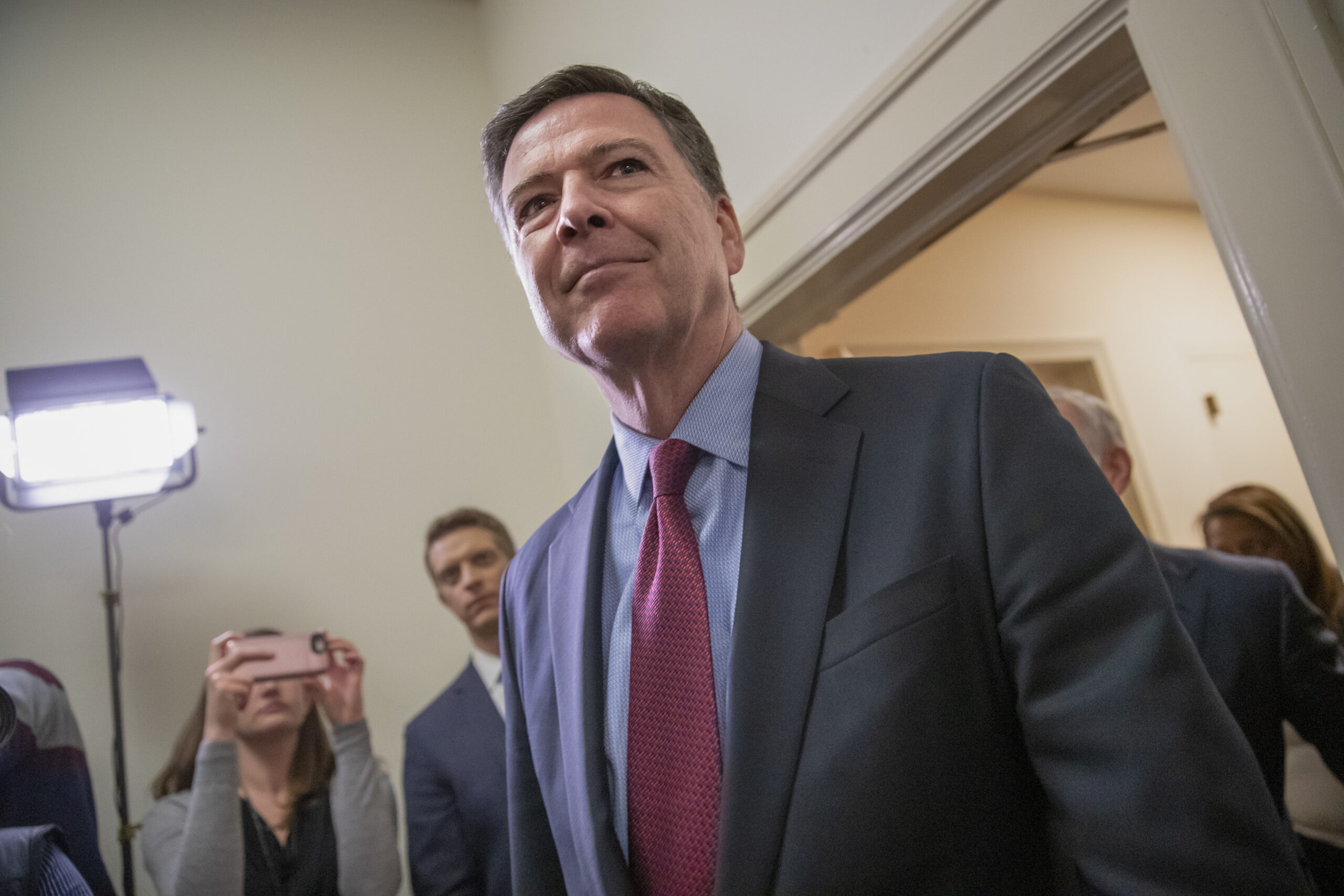
Former FBI Director James Comey emerges from the House Judiciary Committee room to speak to reporters after a day of testimony compelled by the GOP-led Judiciary and Oversight committees, on Capitol Hill in Washington, Friday, Dec. 7, 2018. (AP Photo/J. Scott Applewhite)
Former FBI Director James Comey asked a judge to dismiss a federal indictment against him Monday, arguing that posting a photo last year of seashells spelling out “86 47” did not constitute a “true threat” against President Donald Trump.
Read more Trump Tells the Senate to Delay Recess Until His Voting Bill Passes
In , Comey’s attorneys argue that “86 47” is a well-known political slogan that expresses opposition to Trump, and was commonly displayed at protests ahead of Comey’s post, with thousands of items featuring the slogan sold on the internet that are available to this day.
“But the government now singles out Mr. Comey to prosecute one of the President’s most prominent critics for publishing another person’s statement of political opposition,” the filing states.
“To justify this prosecution, the indictment alleges that Mr. Comey’s ‘86 47’ post constitutes a ‘true threat’ on the President’s life,” the filing states. “That claim is contradicted by every possible source of meaning: dictionaries, context, precedent, and common sense. ‘86’ simply means ‘get rid of’ or ‘eject’ and has no violent connotation except in the most uncommon usages.”
Trending
-
A Heritage Employee Was Caught With Drugs Trying to Get Into the Senate, Police Say
-

The DNC Put Up Its Headquarters as Collateral to Obtain Its Massive Loan
-
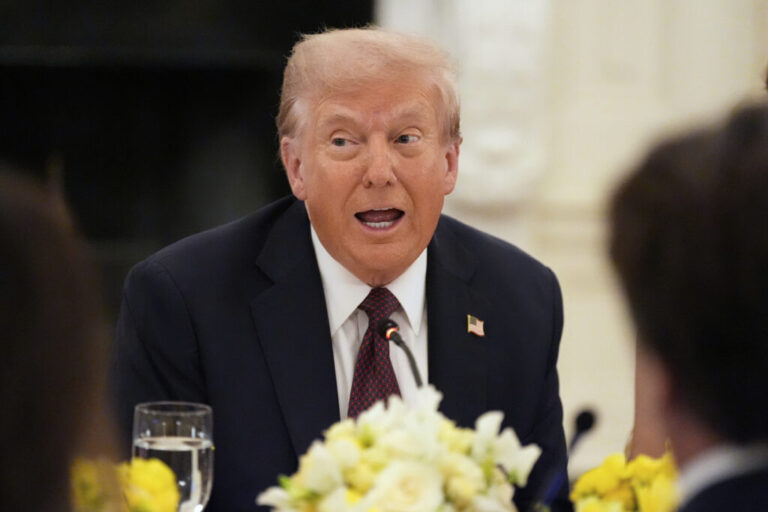
Trump Tells the Senate to Delay Recess Until His Voting Bill Passes
-

Under-the-Radar Ideas to Improve American Energy Policy that Could Pass Congress this Year
“Most dictionaries do not even list the meaning—’to kill’—that the government now proposes,” the filing says.
Comey’s lawyers also argue the indictment “targets protected speech at the heart of the First Amendment.” And forcing Comey to stand trial would itself be a punishment of free speech that would “invite future prosecutions by the Executive Branch against perceived political enemies for their opposition to the President,” they wrote.
A federal grand jury indicted Comey in April with making threats to harm Trump. The Justice Department claimed that Comey knowingly and willfully made a “threat to take the life of, and to inflict bodily harm upon the President of the United States.” Comey was also charged with disregarding a “substantial risk that his communication would be viewed as threatening violence.”
Read more New Rule Could Send Hundreds of Thousands Seeking Asylum to Immigration Courts
If Comey’s motion prevails, it will be the second case against the former FBI director that has been dismissed.
A federal judge threw out a separate case against Comey and New York Attorney General Letitia James in November after concluding that a Trump ally, interim US Attorney Lindsey Halligan, was illegally appointed to the role without Senate confirmation. The Justice Department appealed Halligan’s dismissal in the case.
Former President Barack Obama appointed Comey to lead the FBI in 2013, but Trump dismissed him from the post in 2017. In a two-and-a-half page , then-Deputy Attorney General Rod Rosenstein cited Comey’s “handling of the conclusion of the investigation of Secretary [Hillary] Clinton’s emails.” Comey ultimately did not recommend any charges for Clinton.
While Comey was FBI director, he also handled an investigation into the Trump campaign’s ties to Russia, which the president later cited as a factor in his decision to fire Comey.
Special Counsel Robert Mueller took over the investigation into Russian interference in the 2016 election, and ultimately that Trump did not commit obstruction of justice by firing Comey.
Trump has frequently referred to his longtime foe as “James ‘Dirty Cop’ Comey,” in the years since his firing and throughout the subsequent court battles.
Read more D.C.’s Disabled Residents Have Dismal Transit Options. Would Waymo Help?
About the Author