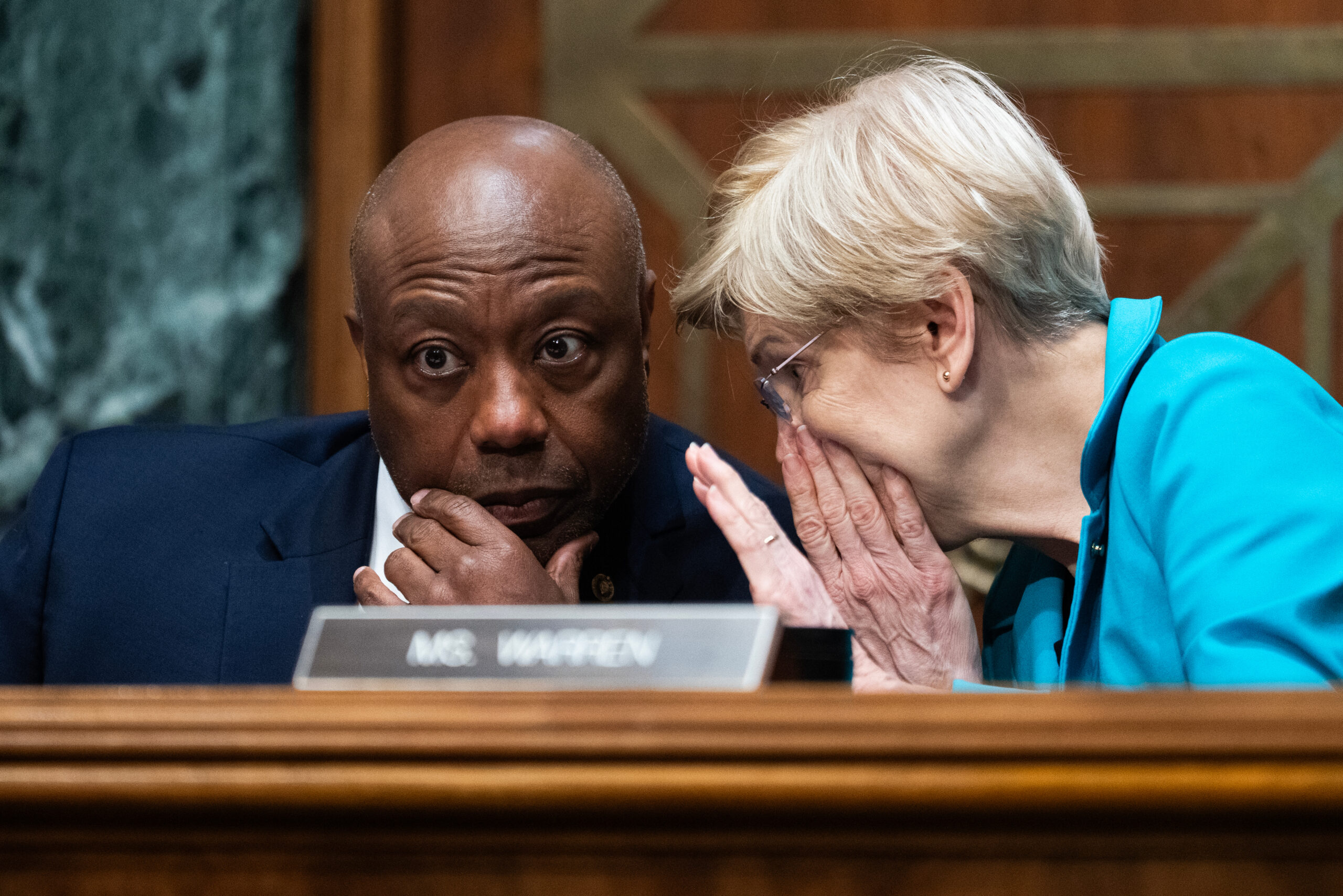
UNITED STATES - APRIL 21: Chairman Tim Scott, R-S.C., and ranking member Sen. Elizabeth Warren, D-Mass., confer during the Senate Banking, Housing and Urban Affairs Committee confirmation hearing for Kevin Warsh, nominee to chairman of the Federal Reserve, in Dirksen building on Tuesday, April 21, 2026. (Tom Williams/CQ Roll Call via AP Images)
After months of a standoff between the Senate and the House, the upper chamber passed legislation aimed at increasing the supply of housing across the country in a 85-5 vote Monday.
Read more Five Arrested as Part of Trump’s Reflecting Pool ‘Vandalism’ Crackdown
The bill, known as the “21st Century ROAD to Housing Act,” now heads to the House, which is expected to send it to President Donald Trump’s desk in the coming days. After months of negotiations, the bill includes top priorities of the Senate, the House and the president, and would be one of the most significant legislative achievements during Trump’s second term.
The Senate was able to proceed with the vote after Sens. Tim Scott (R-South Carolina) and Elizabeth Warren (D-Massachusetts), the top lawmakers on the Senate Banking Committee, struck a compromise with Reps. French Hill (R-Arkansas) and Maxine Waters (D-California), the top lawmakers on the House Financial Services Committee.
According to congressional aides, Hill and Waters dropped their opposition to the Senate package after Scott and Warren agreed to House lawmakers’ requests.
Waters, whose office did not respond to a request for comment, wanted stronger tenant protections and stricter congressional oversight over the Rental Assistance Demonstration program, which allows public housing authorities to receive federal funding for affordable housing development and preservation.
She also wanted changes to the Senate’s Build Now Act, which awards Community Development Block Grants — federal grants to incentivize affordable housing production — to cities and towns with low housing supply and high rates of homebuilding.
In the Senate’s final version of the legislation, the CDBG-Disaster Recovery program, which provides federal funds for localities hit by natural disasters, is reauthorized for three years, a reduction that Hill requested before both chambers reached the final agreement, according to a congressional aide.
The bill loosens environmental review standards for certain small housing developments to speed up construction, and it increases the cap for community bank investment in housing and local development projects, a key priority for House Republicans.
Read more Tucker Carlson Says He’s Leaving the GOP: ‘I’m Out’
It also includes a key priority for Trump and Warren: a limit on private equity’s control over housing.One of the most controversial elements in some of the earlier versions of the legislation was language that would have required institutional investors to sell build-to-rent properties seven years after construction. After backlash, lawmakers ultimately removed the requirement and narrowed the provision to place fines on corporations that own more than 350 single-family homes, with exemptions for new construction of single-family long-term rentals.
“Never before has the United States Congress had the courage to stand up to private equity in any industry. To do it in housing is a reminder of the importance of maintaining housing, not as a corporate investment, but as a place for families to live,” Warren, who played an outsized role in the negotiations, told NOTUS shortly after the final agreement was revealed.
House negotiators agreed to the investor limit, and the modifications appeased industry groups that opposed the forced sale provision.
“What originally [was] there was going to do harm, so we feel like that part has been resolved,” said Sharon Wilson Géno, president of the National Multifamily Housing Council, which, like , opposed the original language passed by the Senate in March.
With Trump’s signature, the bill would become the first major piece of housing legislation signed in at least three decades. It would also be a massive policy win for the Trump administration as it messages on affordability ahead of the midterm elections this year.
“This is such a great opportunity for the congressional Republicans and the president to get this as a win on a critical issue that’s going to be on the ballot in November,” a senior administration official told NOTUS back in May of the need for final passage.
Read more Federal Judge Tosses Subpoenas Targeting Tim Walz and Minnesota Democrats
About the Author